
Is Argentina LatAm's land of opportunity?
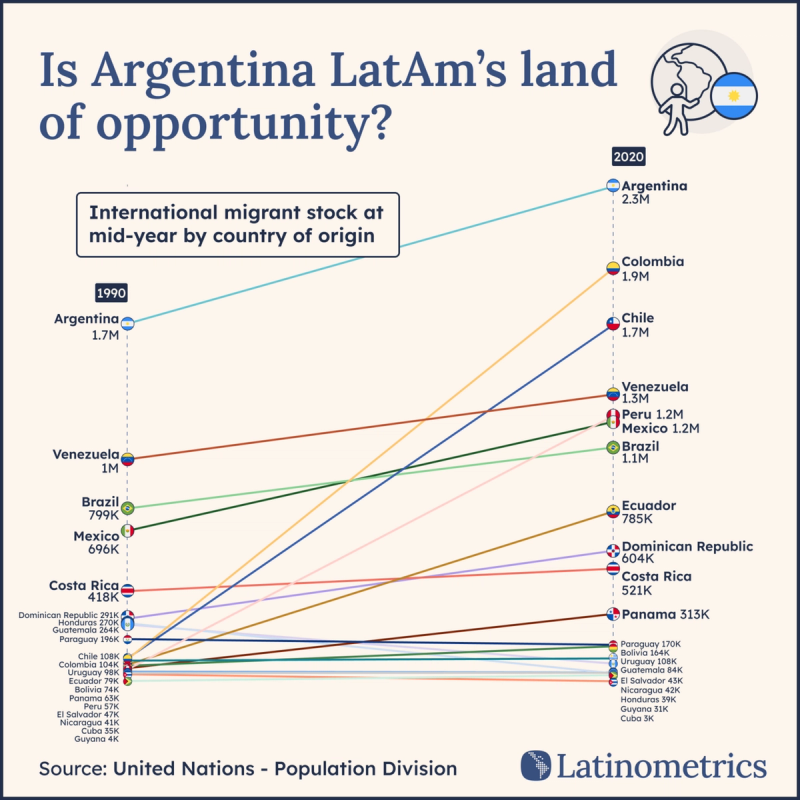
Spotlight on Argentina - Day 3: Just like the US up north, there's a clear top migrant destination in South America.

🇦🇷 Latinometrics is was in Buenos Aires! 🇦🇷
In honor of this beautiful city, we've been publishing a series of special-edition charts about Argentina.
For our last day: Argentina’s migrants.
Hotel de Inmigrantes, where foreigners were hosted for free from 1905 - 1911 in Buenos Aires until they found a job.
As with every election year, immigration – particularly through the US southern border – is a key issue for many voters and is attracting lots of attention. But what attracts less attention is how many immigrants move around within Latin America, and which regional countries attract the most foreigners.
Many Latin American states have long histories of attracting immigrants from around the world, including the Japanese Nikkejin in Peru, Ashkenazi Jews in Mexico, and Arab immigrants near the borderlands area of the Iguazu Falls.
Is Argentina LatAm's land of opportunity?
Today, Argentina — the crisol de razas — remains the country which attracts the most foreigners in Latin America. This shouldn’t be too surprising: Argentina blends relatively relaxed immigration laws with a culture that’s remained relatively open to outsiders.
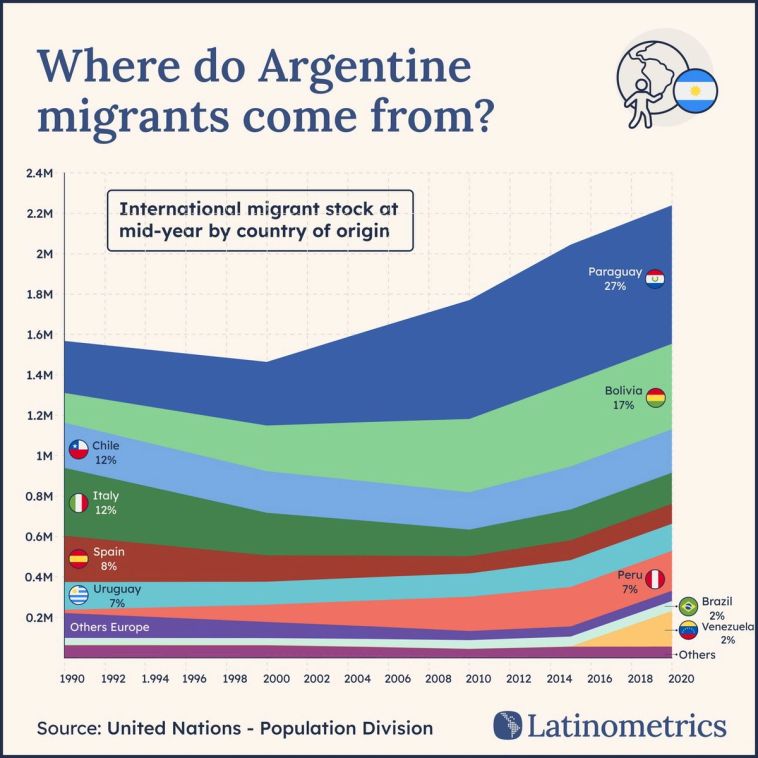
Most recently, the Southern Cone country has seen tens of thousands of Russians arrive since the Russo-Ukrainian War began in early 2022, but it’s also seen traditional migrant groups like Italians or Spaniards be gradually replaced by more nearby sources.
For example, hundreds of thousands of Paraguayans and Bolivians have moved down south in recent years. These immigrants often migrate in search of better work opportunities, with many perhaps preferring to go elsewhere but lacking the funds necessary to make a trip to the United States or Europe feasible.
Where do Argentine migrants come from?
Naturally, these Hispanics likely have an easier time assimilating into Argentinean culture than the Arabs or Asians who moved to the country a century ago and needed to learn the language from scratch. However, as Argentina struggles to emerge from recession it’s also helped by this influx of foreign labor, given the upticks in innovation and market dynamism seen with high immigration.
Over a century after the “whitening” process which saw Argentinean elites seek to attract European immigrants to shape their burgeoning country’s demographics, things look quite different. Former president Carlos Menem (1989-1999), for example, was born to two Syrian immigrants.
Whatever Argentina’s future looks like, no doubt immigrants will play a key role in shaping it.


