
Timeline: Visualizing 500 Years of Commodity Booms in LatAm
500 years of commodity booms: from gold to quinoa, prosperity often ends in pain.


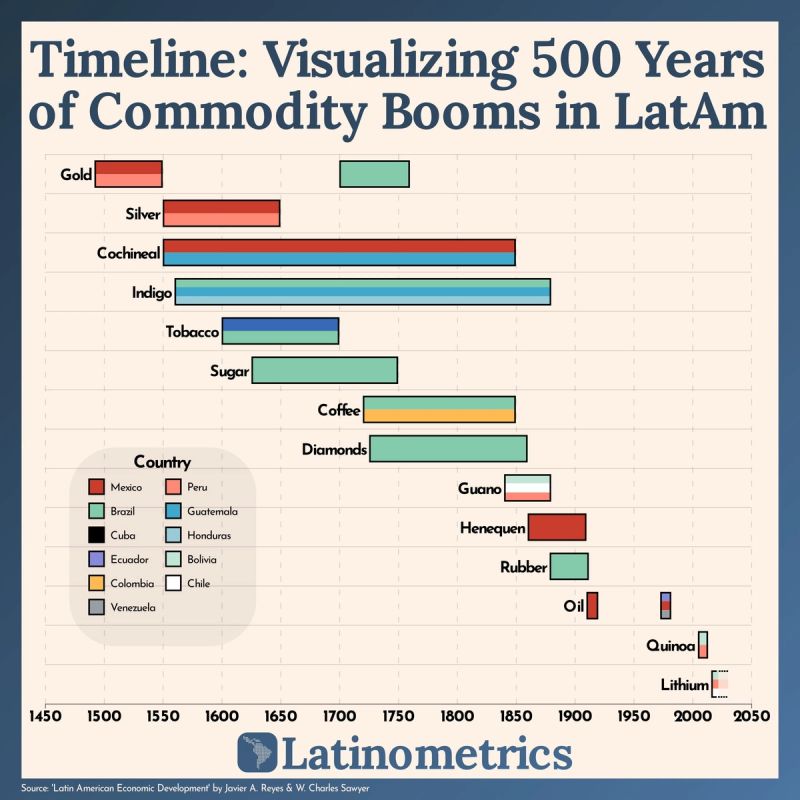
Commodity booms happen when a new product use or source of an existing product is discovered. Just like these booms can bring tremendous economic prosperity, they also often leave a lot of pain on their way out. As new technologies emerge that no longer need the product or the product is depleted, global demand can fall sharply and quickly.
The demand for gold during the colonial period gave rise to the first commodity boom in Latin America. Some estimates claim that over 100 tons of gold were taken back to Spain from the Americas, which powered a massive era of prosperity for the country. Our chart shows that as the Spaniards ran out of gold to extract, they turned to silver and enriched themselves from it for the next 100 years.
Also during the colonization of our continent, cochineal dye's discovery in the 16th century kicked off a nearly 300-year boom in Mexico and Guatemala. First used by the Mayas and later the Aztecs, cochineal dye is derived from an insect that is a parasite of the cactus plant. The rich, red color of the dye was far superior to anything available in Europe then, and it soon became Mexico's second largest export after silver. The advent of cheap artificial dye by the mid-19th century brought the cochineal industry to a halt.
So far, both commodity booms of the 21st century have happened in the Andean region. The first started through the "discovery" of quinoa by health-conscious consumers in the rich world. Quinoa, however, has been a staple in the diets of Andean communities for centuries. Quinoa farmers saw a relatively short 8 years of unprecedented prosperity as demand for their product skyrocketed. Sadly, as quinoa gained popularity, production expanded away from the Andean highlands and into more efficient agricultural land, bringing the boom to an end.
The second Andean boom is ongoing thanks to the explosion of electric vehicles, which require lithium for their batteries. How long until a new, more efficient chemical is discovered and this commodity boom ends?


