
🇲🇽 Wages
Mexico's employment boom isn't boosting wages.


Every once in a while, thanks to the power and beauty of social media, our charts are seen by some pretty interesting or powerful people, like Nayib Bukele or Elon Musk.
One such occasion was when outgoing First Lady of Mexico, Beatriz Gutiérrez Müller, retweeted our chart on record-low unemployment in Mexico, which also attracted sarcastic replies from leading regional analysts.
Now, more people having jobs is great. We love jobs for people, especially when they’re decent, safe jobs which help them take care of their families. But if we may break Señora Gutiérrez’s heart for just one moment, we should mention that Mexico’s high employment levels have not translated to higher wages.
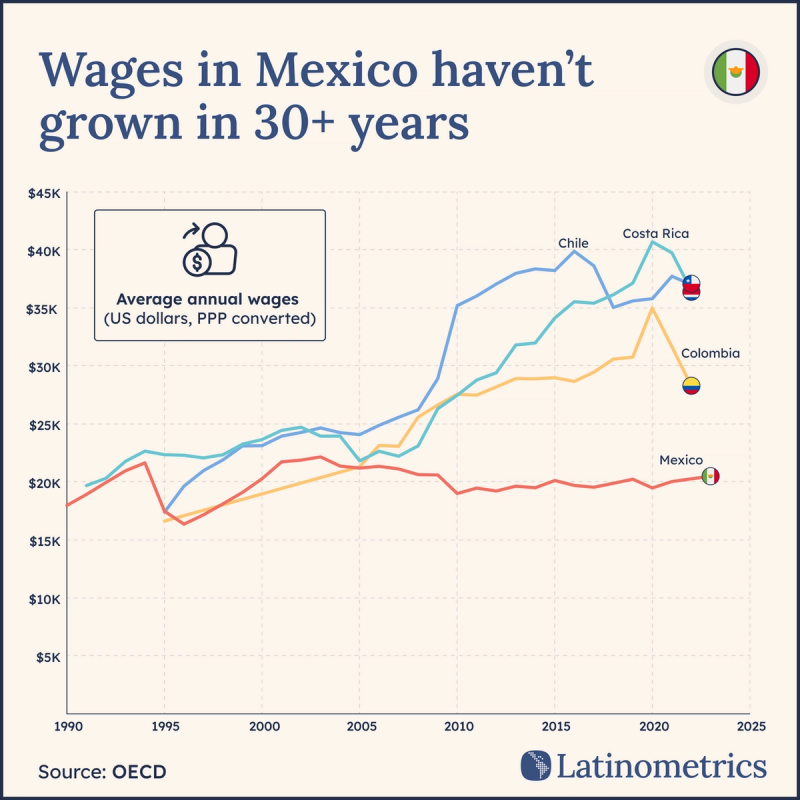
In real terms, Mexico’s wages have actually stagnated the last 30 years.
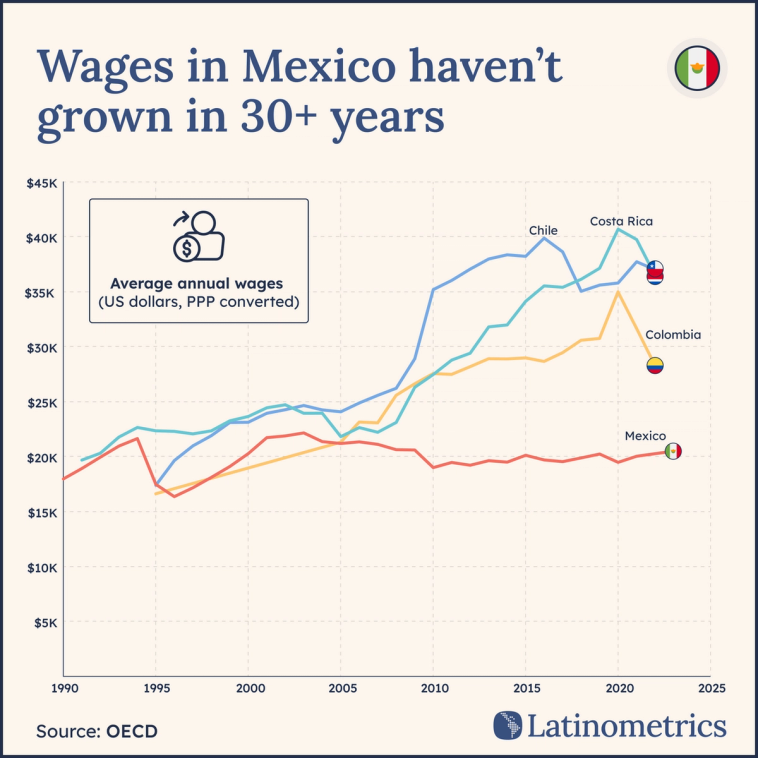
This is a tough scenario to imagine, especially given the post-NAFTA boom in free trade and recent nearshoring investments. Despite becoming one of the world’s largest exporters, and receiving more foreign direct investment (FDI) than nearly any other Latin American country, Mexico has seen its wages fall below, and stay below, regional peers like Chile, Colombia, and Costa Rica.
We specifically chose these three countries as points of comparison, not just because they’re spread out throughout the hemisphere and start with the same letter, but because of their common membership in the Organisation for Economic Co-operation and Development (OECD), a 38-country Paris-based intergovernmental organization of which Mexico was the first regional member.
Despite joining the organization in 1994, over 15 years before any other Latin American country, Mexico’s wages today lag behind its peers—and it gets worse.
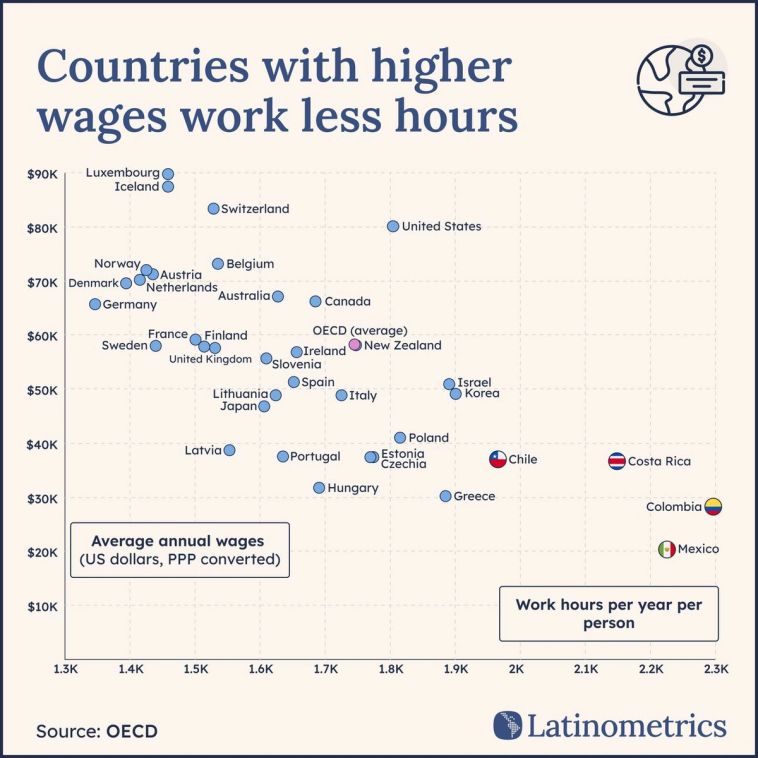
Mexican employees on average work more than their counterparts in almost every other OECD country.
So to return to our earlier idea of being for good jobs, it’s clear something needs to shift. Mexicans work more than nearly everyone, but make less. We’d prefer the country’s workers be able to work half as much for higher pay, more akin to a Canada and a Germany than to a Colombia. Growth in productivity would be a good first step.
Because good, decent jobs should bring benefits, pensions, safety—but also, leisure time to spend with those who matter most.
Source: OECD, Average annual wages (constant 2024 USD PPP). Growth measured from 1990 or earliest available year.
Source: OECD, Average annual wages (constant 2024 USD PPP). Growth measured from 1990 or earliest available year.


