
How does Latin America collect tax money?
Latin America pays less tax than OECD countries, but who's *really* footing the bill?

We've all heard someone complain about taxes. In Latin America, we have a skeptical attitude towards our hard-earned money being spent responsibly by our public servants.
Most of us don't think about it until we're adults and in the economic systems that bring avocados, cars, and microchips to life. Then we realize that there are multiple scenarios under which the tax man comes, often double-dipping: in everyday purchases, when we score some income, or just for owning property for another year (more or less in that order).
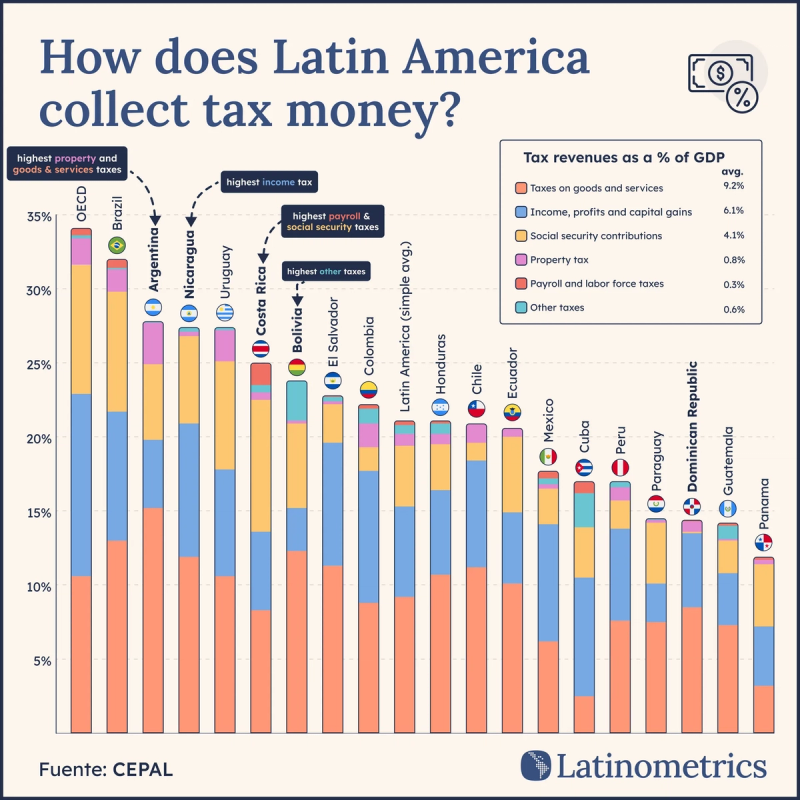
What you might not know (until today, thanks to your friends at Latinometrics) is that every single Latin American country collects less tax than the average OECD country, in terms of tax revenue as a % of their GDPs.
Does that sound great? It depends on who you ask.
Although we pay less tax proportionately than the OECD, this doesn't necessarily mean we give away a lower share of our own money; it simply means the economy as a whole contributes a lower proportion to the government.
For instance, if you own property in Argentina, you're a significant source of revenue for your local and provincial governments. Meanwhile, if you live in Guatemala or Paraguay, property taxes constitute less than 0.2% of GDP.
So you should move to Guatemala right? Along with Panama, Guatemala is one of the best places if you're looking to minimize taxes, but it depends on what kind of taxes you fear most. Panama collects the bulk of its tax revenue from labor-related sources like payroll and social security; in other words, the country places more of its tax burden on workers than on businesses.
So maybe the better question isn't how much we're taxed, but who is doing the paying, and more importantly, what we're getting in return.


