
Here are Latin America’s most common young adult deaths
What's killing Latin America's young adults?

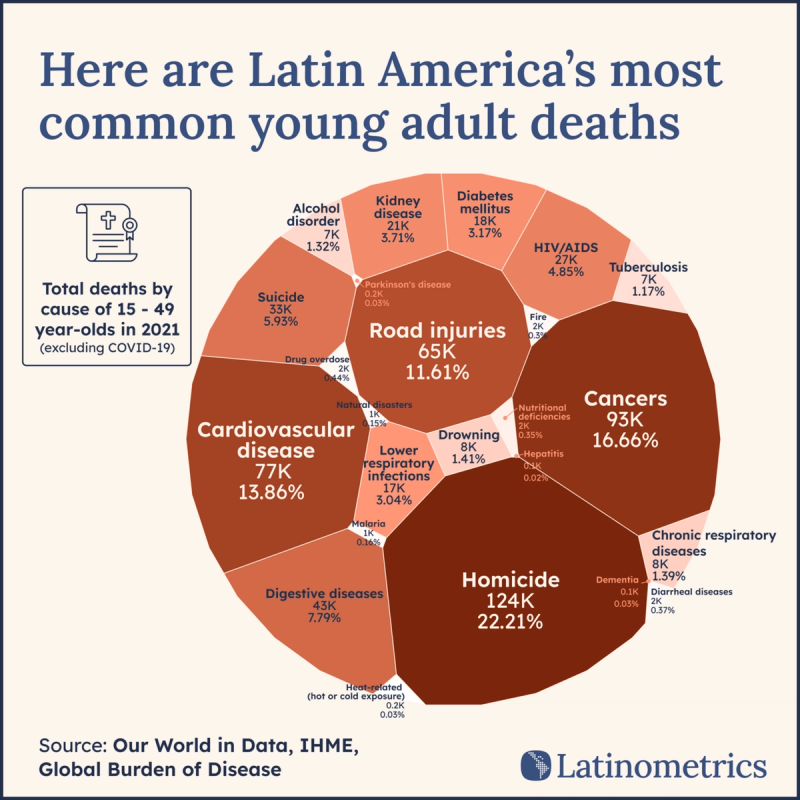
Here’s something which may surprise you: if you’re between 15 and 49 years old in Latin America, you’re more likely to die by homicide than anything else.
Over a fifth of all young adult deaths in the region stem from homicide, which is comparatively quite high at the global level. Whereas cardiovascular and heart disease is the world’s largest cause of death within this group, in Latin America violence is a far more prevalent issue, as seen in the region’s two largest countries of Brazil and Mexico.
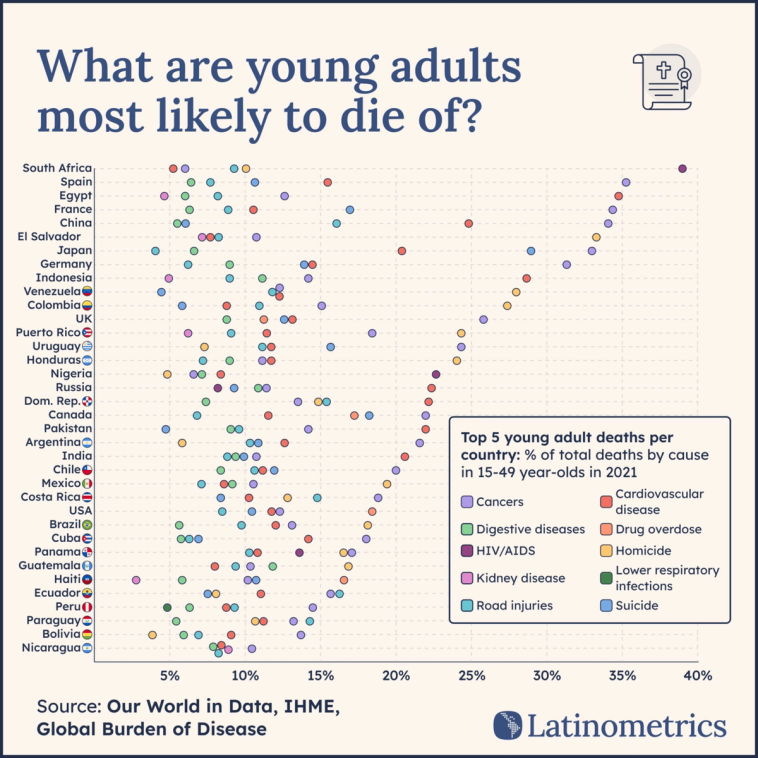
Beyond homicide, we get to cancers and cardiovascular disease, in line with much of the world. Countries like Argentina and the Dominican Republic see a plurality of their young-adult deaths from these medical causes. There’s suicide, which unfortunately is a top-5 cause of death in countries as varied and diverse as Colombia, Cuba, Uruguay, and Venezuela.
Then there’s, somewhat surprisingly, road injuries, which claimed an estimated 65K young-adult lives in 2021 and reflected the highest cause of death in this category in both Ecuador and Paraguay.
With the aim of holding our region up to the rest of the world, we think it’s worth examining what can be done to address mortality rates across Latin America’s adult population. Does the strategy include greater investments in mental healthcare or different eating habits? Speedbumps to try to bring down road-related injuries?
We don’t have all the answers, but hopefully as a region we can address these and bring Latin American health trends in line with more developed regions, first and foremost through reducing violence.


