
Against the trend: Rising fertility rates
Which countries have reversed the trend of declining fertility?

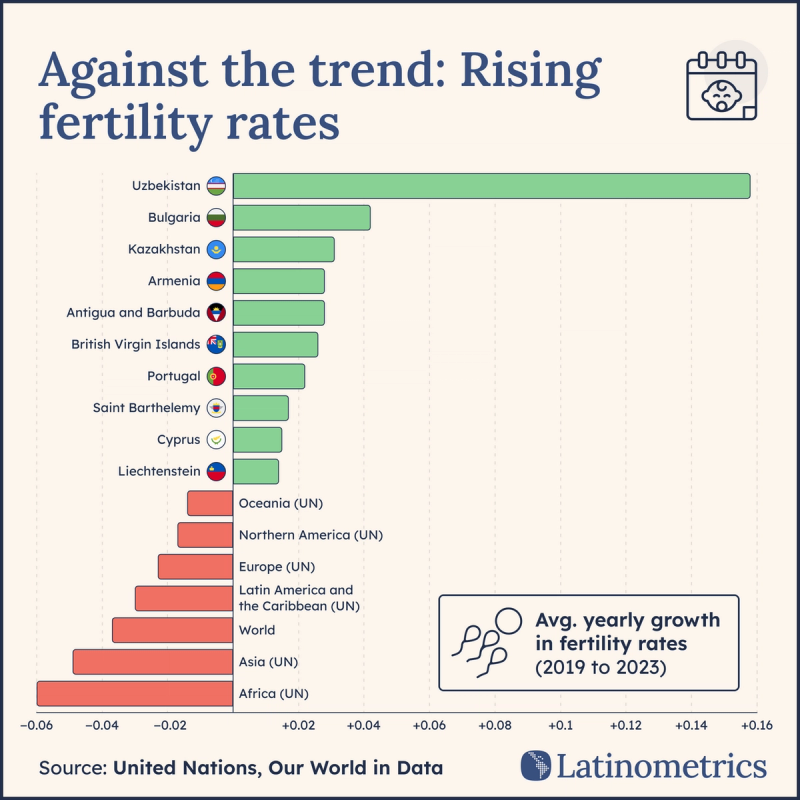
The decline of mothers having babies is perhaps modern life's most universal trend. All around the world, we've seen dramatic drops in what the UN calls "fertility rates," or the average number of babies that a woman has. This number now sits at 2.3, compared to twice that in 1972.
Today, we're looking at the outliers — countries that have somehow managed to reverse the trend of declining fertility.
Many governments, especially in Europe, have incentivized mothers to bear more children. Everything from "baby bonuses" to parental leave that most other countries can only dream of. Hungary pays $27K+ to families that pledge to have three children. Estonia, Bulgaria, and Sweden (among others) now offer over a year of paid leave for parents.
The trend is strong; almost no major country has been able to reverse it, but there are exceptions. In recent history, Uzbekistan has been the most successful case study. Its fertility rate made a dramatic comeback from 2.2 to 3.5 in 2023.
The nation of 36M people has been praised as one that correctly creates the right opportunities for its young people. According to the UNFPA, this it has prioritized healthcare, longevity, education, and a strong labor market.
In Latin America we didn't find a single country that increased its fertility rate from 2019 to 2023. The already low rates in countries like Argentina, Chile, and Costa Rica dropped even lower, by 20%, 18%, and 17%, respectively, in just those five years.
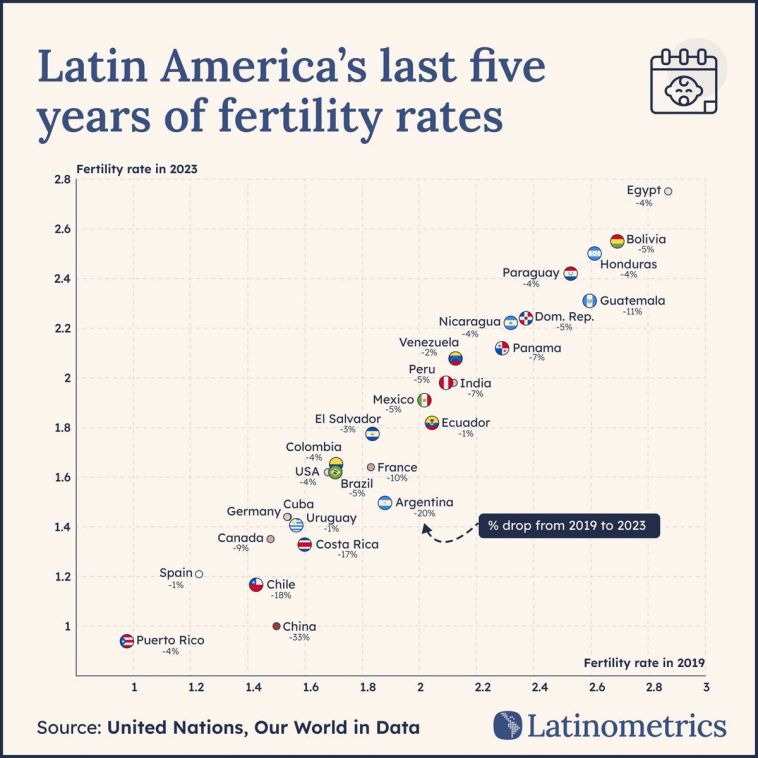
As of 2023, 8 out of 20 countries had a 2.1 or higher fertility rate, which is considered the number needed to hold a population steady or grow effectively.
Baby incentives are virtually non-existent in our region. At the very least, this is something that leaders should be aware of. Should Latin America, especially given its "still developing" status, be learning from Uzbekistan?


