
Bolivia Slashed Infant Mortality by 88% in 60 Years
Bolivia slashed infant mortality by 30% after a free healthcare policy for mothers and children.

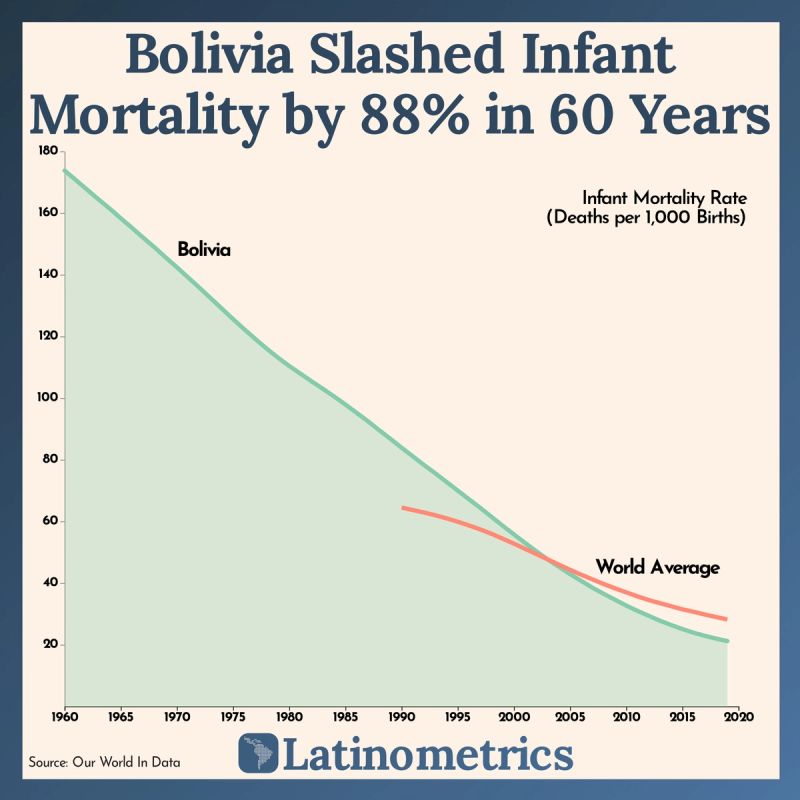
Infant mortality rates have been drastically decreasing worldwide over the past century. In a span of 25 years, infant deaths decreased from 12.1M to 5.8M per year. No wonder Bill Gates called this “the most beautiful chart in the world.”
Although the drop is commonly visualized with data from Africa, the same trend is visible in Latin America, and Bolivia reflects it like no other. One-eighth as many newborn babies die yearly as did 60 years ago. Many babies who died during the 20th century did so from infectious diseases like measles, so vaccines and antibiotics have been critical to reducing mortality rates. However, Bolivia’s efforts to improve the health of children didn’t stop there.
In the mid-1990s, the Bolivian government established a policy of free universal healthcare for mothers and children, in which maternal health and infant survival became a priority.
The system, known as the Universal Mother and Child Insurance scheme (SUMI), is a comprehensive health package that covers about 500 health problems in children from birth to five years of age. Bolivia’s infant mortality rate dropped by 37.7% in urban areas, and 29.9% in rural areas right after the program was implemented.


