
Half a million Brazilians now call Portugal home
500 years after Pedro Cabral landed in Brazil, a whole lot more Brazilians are landing in his own home country.

We’re speaking at Nomad Capitalist Live! Come hear our contributing editor and partner speak on opportunities in Latin America amidst a changing world. Get your tickets here.
In 1500, Pedro Álvares Cabral became the first human in history to ever lay foot on four continents: Europe, Africa, South America, and Asia.
More impressively, he became the first person from the Old World to “discover” Brazil, which he promptly claimed for Portugal, as was all the rage back then.
Five hundred years later, much has happened. Cabral died in disgrace, probably in 1520. Lisbon has suffered at least five major earthquakes. Brazil got its independence and won five—perhaps soon to be six?—World Cup trophies.
Oh, and Portugal has become a top destination for Brazilian emigrants.
Between Cabral’s landing and Brazil’s independence in 1822, some 800K Portuguese settlers moved to Brazil. Following the country’s independence, this number jumped by over a million new immigrants from the Old Country.
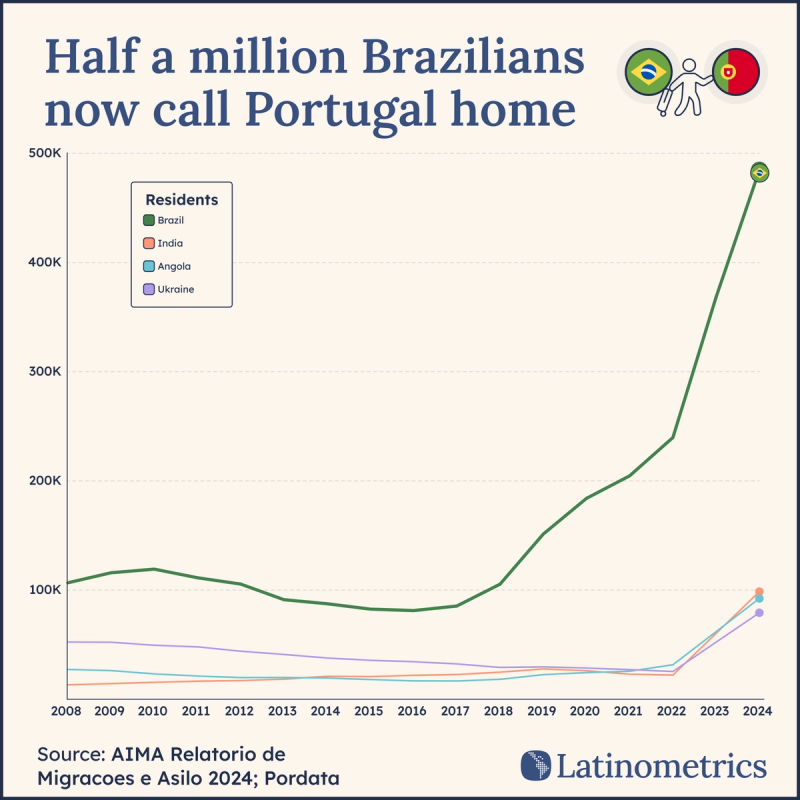
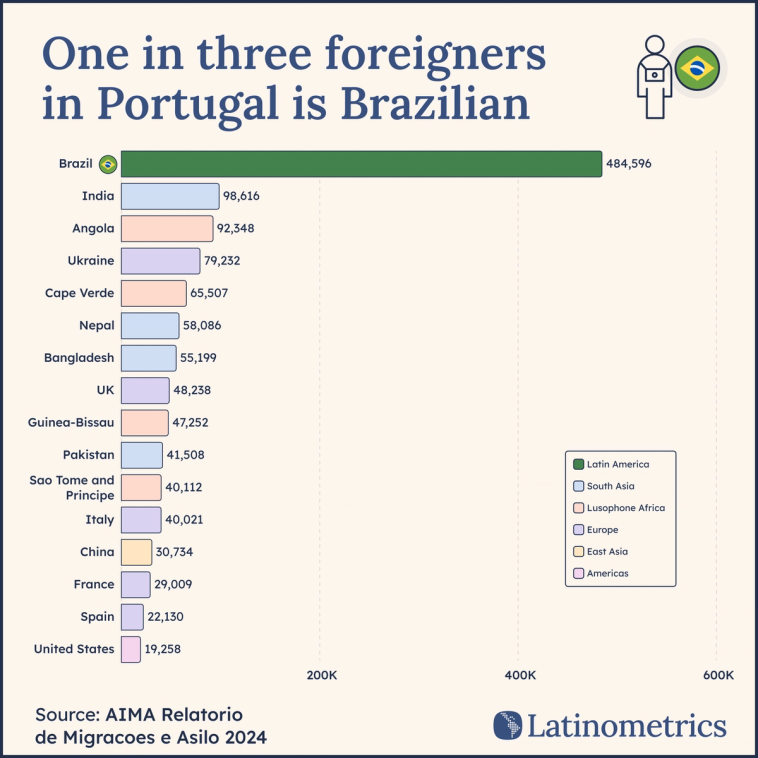
Today we’re witnessing a reversal of the trend, even with similar numbers. Portugal, a country of just 10M people in total, is today home to over half a million Brazilians—meaning the country is now at least 5% Brazilian.
We say ‘at least’ to account for both the undocumented Brazilians who have simply overstayed their visas (surely they forgot) as well as the thousands of Brazilians with European (often Italian) passports who simply have not registered as Brazilians.
Portugal, which like the rest of Europe faces a demographic crisis exemplified by its low fertility rates, has encouraged this immigration through, among other things, a six-month job-seeking residency permit for Brazilians as well as citizens of other Lusophone countries like Angola, Cabo Verde, and East Timor.
Perhaps unsurprisingly, then, these countries’ citizens have become the bulk of Portugal’s immigrant class.
We of course applaud any Brazilians who are departing home for Iberian shores, or even using Portugal as a launching pad as they go on to explore new opportunities in the 27-member European Union of which Lisbon forms part.
However, as with their Hispanic peers who have made similar moves to Madrid, or for that matter Miami, we do wonder just how much this post-COVID boom in migration will come to shape Brazil’s development.
After all, 20 years ago the Brazilian population in Portugal was less than a fifth what it is today. As hundreds of thousands of Brazilians move overseas, taking with them their ingenuity in entrepreneurship, their STEM smarts, and their one-of-a-kind music, we just hope Brazil won’t come to sente falta deles.


