
Argentina represents 28% of all IMF debt
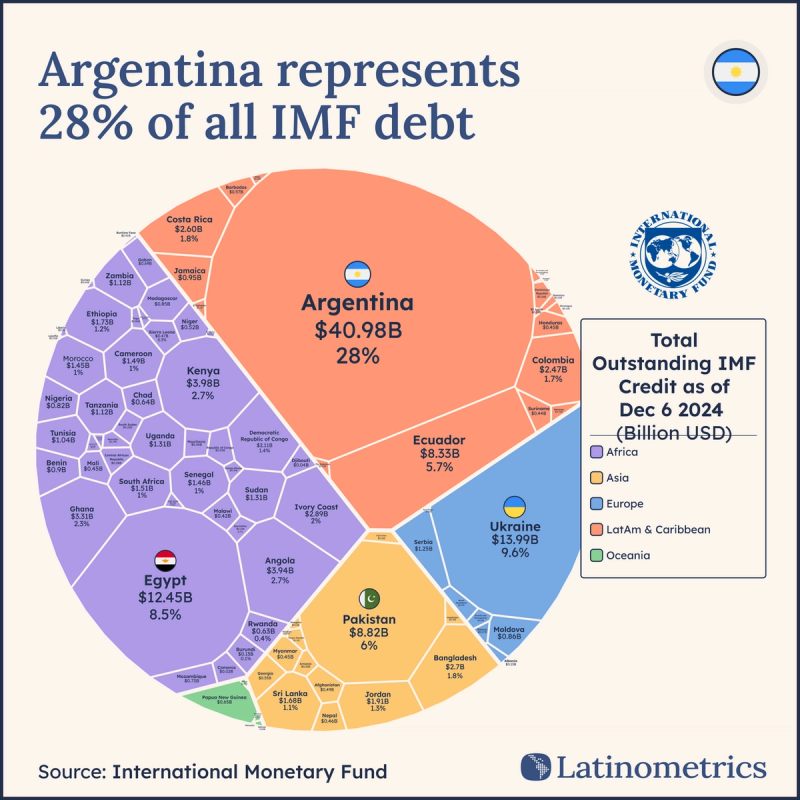
Argentina owes $41B to the IMF, 28% of all its credit—more than any other country.

Why has Argentina relied on the IMF for so long?
Over the last seven decades of membership in the IMF, governments from across the Argentinean political spectrum have stepped up to tango with the Washington-based financial institution. The IMF has served as a lender of last resort to the Argentinean economy over twenty times, including most recently in July of last year.
As of a month ago, Argentina owed nearly $41B to the IMF, more than any other economy country worldwide. Over a quarter of all IMF credit has been issued to Argentina, well ahead of troubled peers like Egypt, Pakistan, and war-torn Ukraine.
Given its long history of being both an unreliable debtor and a fiscal nightmare, Argentina has been all but shut out of international markets. Subsequently, back-to-back leaders have had to work with the IMF to arrange long-term financing solutions, to the tune of tens of billions of dollars, just to keep the country afloat.
Ex-president Nestor Kirchner famously tapped nearly a third of the country’s foreign reserves in 2006 to clear Argentina’s then-debt of $9.81B. However, a slowdown in economic growth and missteps by subsequent governments have only worsened the problem, passing off huge sums to their successors like a hot potato.
And there’s a real cost to this, in the form not only of millions of dollars in interest payments but also in the IMF’s famous conditionalities. As part of the organization’s debt restructuring program, countries have to agree to radical changes in their governance and budget, often leading to austerity cuts and subsidy rollbacks.


